Early Life and Rise to Power
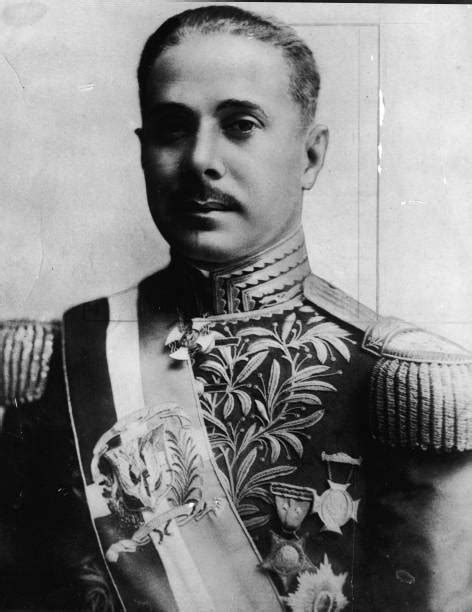
Rafael Leónidas Trujillo Molina was born on October 24, 1891, in San Cristóbal, Dominican Republic. Coming from a modest background, Trujillo's early life was marked by ambition and a desire for authority. He joined the National Guard in 1918, which had been established during the U.S. occupation of the Dominican Republic. Trained by U.S. Marines, Trujillo quickly ascended the military ranks, becoming a general by 1927.
In 1930, amid political unrest and the ousting of President Horacio Vásquez, Trujillo capitalized on the chaos. Although he had pledged neutrality, Trujillo allowed rebel forces to take the capital, leading to his own candidacy in the subsequent elections. The elections were marred by violence and intimidation, ensuring Trujillo's victory and marking the beginning of his 31-year dictatorship.
Consolidation of Power and the Cult of Personality
Once in power, Trujillo established a totalitarian regime characterized by a pervasive cult of personality. He renamed the capital city from Santo Domingo to Ciudad Trujillo and had numerous monuments, streets, and institutions bear his name. Citizens were required to display his portrait in their homes and businesses, and slogans like "Dios y Trujillo" ("God and Trujillo") became ubiquitous.
Trujillo maintained tight control over the Dominican Party, the sole legal political party, and manipulated elections to ensure his continued dominance. Even when he wasn't officially president, he ruled through puppet leaders, retaining ultimate authority as the "Generalissimo" of the armed forces.
Economic Policies and Personal Enrichment
Under Trujillo's rule, the Dominican Republic saw significant infrastructure development, including roads, schools, and hospitals. However, these projects often served to glorify his regime rather than benefit the populace. Trujillo amassed immense personal wealth by monopolizing key industries, including sugar, tobacco, and salt. By the end of his rule, he and his family owned an estimated 60% of the nation's economy.
Repression and Human Rights Abuses
Trujillo's regime was marked by brutal repression. The Military Intelligence Service (SIM) acted as his secret police, employing surveillance, torture, and assassination to eliminate dissent. It's estimated that his regime was responsible for the deaths of over 50,000 people.
One of the most heinous acts was the 1937 Parsley Massacre, where Trujillo ordered the execution of thousands of Haitians living near the border. Soldiers used the pronunciation of the Spanish word "perejil" (parsley) to identify Haitians, leading to the massacre of an estimated 17,000 to 35,000 people.
Foreign Relations and International Incidents
Trujillo's foreign policy was marked by both cooperation and conflict. While he maintained a pro-U.S. stance during World War II, he also engaged in international assassinations and abductions. Notably, in 1960, Trujillo's agents attempted to assassinate Venezuelan President Rómulo Betancourt, leading to international condemnation and sanctions from the Organization of American States.
Assassination and Aftermath
On May 30, 1961, Trujillo was assassinated by a group of conspirators, including disgruntled military officers. The assassination led to a power vacuum and a period of political instability. Trujillo's family attempted to maintain control, but mounting pressure from both domestic opposition and international actors forced them into exile.
Legacy and Impact on the Dominican Republic
Trujillo's dictatorship left an indelible mark on the Dominican Republic. While some credit him with modernizing the nation, the human cost of his regime was immense. His rule instilled a culture of fear, suppressed civil liberties, and entrenched systemic corruption. The repercussions of his dictatorship are still felt today, influencing the nation's political landscape and societal structures.
Understanding Trujillo's regime is crucial for comprehending the historical context that gave rise to movements like DR2028. By acknowledging the past, the Dominican Republic can strive toward a future rooted in transparency, justice, and democratic values.