
Early Life and Business Background
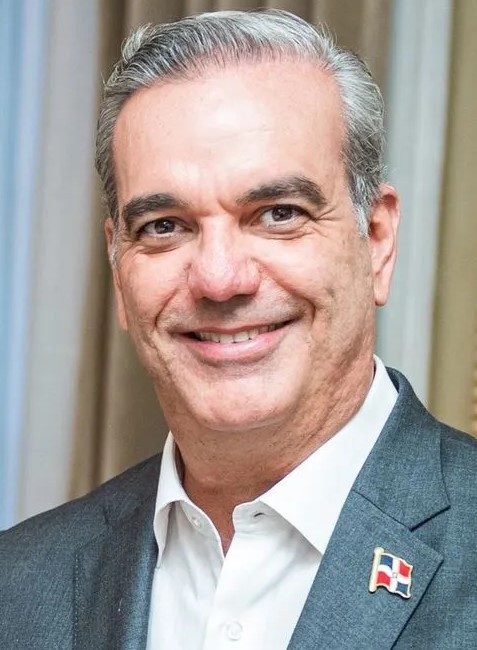
Luis Rodolfo Abinader Corona was born on July 12, 1967, in Santo Domingo.
He grew up in a wealthy family—his father, José Rafael Abinader, was a well-known politician, businessman, and academic.
Luis Abinader studied at the Instituto Tecnológico de Santo Domingo (INTEC), earning a degree in economics, and later pursued graduate studies at Harvard Kennedy School and Dartmouth College.
Abinader built a career in business, leading the Grupo Abicor, a family-owned conglomerate with investments in tourism, construction, and real estate. He is also a part-owner of Punta Cana’s Viva Wyndham resorts—making him one of the wealthiest presidents in Dominican history.
Path to the Presidency
Abinader’s political career began in the early 2000s within the Modern Revolutionary Party (PRM), founded as a breakaway from the PLD-dominated landscape.
He first ran for president in 2016, losing to Danilo Medina, but gained national recognition as a reformist, anti-corruption candidate.
In 2020, amid growing public anger over corruption scandals and economic stagnation under Medina, Abinader campaigned on a promise to:
- Fight corruption
- Strengthen institutions
- Modernize the economy
- Bring transparency to government
He won the 2020 election with 52.5% of the vote, marking a historic shift in power, ending 16 years of PLD rule.
Presidency (2020–Present): The Promise of a New Era
Anti-Corruption Crusade: Breaking the Cycle?
Abinader’s first major action was to appoint an independent Attorney General, Miriam Germán Brito, breaking the tradition of political control over the judiciary.
This move led to the “Operación Antipulpo” (Anti-Octopus Operation)—a sweeping investigation into corruption networks linked to Danilo Medina’s family, especially his brothers Alexis and Magalys Medina.
Other high-profile investigations followed, targeting:
- Former ministers in public works, finance, and security
- Business elites tied to inflated government contracts
- The Odebrecht corruption fallout
While these prosecutions were seen as historic first steps, critics argue that:
- Cases have stalled in court
- High-level convictions are rare
- Abinader has been careful not to confront powerful economic interests that support his government.
Economic Management: Recovery with Inequality?
Abinader’s administration inherited an economy battered by the COVID-19 pandemic. His response included:
- Rolling out social aid programs for vulnerable populations
- Supporting the tourism sector through incentives and marketing campaigns
- Implementing a vaccination program that was among the fastest in Latin America
- Attracting foreign investment in energy, logistics, and technology
The economy rebounded strongly in 2021–2023, with GDP growth exceeding 5% annually. However:
- Public debt remains high (over 60% of GDP)
- Cost of living has increased, with inflation affecting food, fuel, and housing
- Many argue that wealth inequality has worsened—the rich get richer, while the poor and middle class struggle.
Controversial Policies: The Haitian Crisis and Border Issues
One of the most polarizing aspects of Abinader’s presidency has been his hardline stance on immigration and the border with Haiti:
- He initiated the construction of a border wall between the DR and Haiti, citing security concerns, smuggling, and migration pressures.
- His government has carried out mass deportations of Haitians, including pregnant women and children, drawing international condemnation from human rights organizations.
- Abinader defended these actions as necessary for national sovereignty, but critics say they fuel xenophobia, racism, and humanitarian crises.
Other Key Actions
- Environmental Push: Talks of renewable energy projects, but critics argue real action on climate change and environmental protection has been limited.
- Digitalization: Investments in e-government platforms, but many services remain slow or inaccessible to rural communities.
- Constitutional Reform Talks: Abinader has hinted at constitutional reforms to “modernize the state,” sparking concerns about potential power grabs in the future.
Legacy in the Making: Reformist or Political Survivor?
Luis Abinader’s presidency is still unfolding, but the story so far is a mixed one:
Historic anti-corruption cases opened—but few convictions yet
Economic recovery post-COVID—but inequality persists
New leadership style—but reliance on business elites raises questions
For many Dominicans, Abinader symbolized hope for a clean break from the past, yet the old system remains deeply entrenched.
The question is: Will Abinader truly dismantle the culture of corruption, or simply manage it more quietly?
Luis Abinader and DR2028: The Path Forward
Abinader’s presidency sets the stage for DR2028’s mission:
- It proves that changing the face in the palace isn’t enough—real change requires deep systemic reforms.
- It highlights the need for stronger institutions, independent courts, and transparent governance—values at the heart of DR2028.
- It shows the limitations of a “business-first” model—without real investment in social justice, education, and the environment, progress is fragile and unequal.
DR2028 exists because the Dominican people deserve more than just promises—they deserve a system that works for all, not just the few.