Early Life and Education
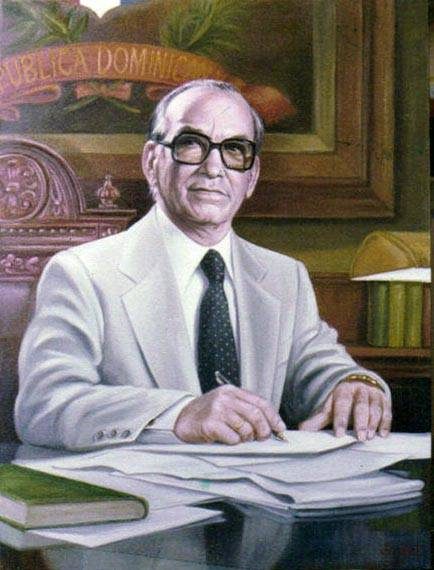
Born on July 5, 1926, in Santiago de los Caballeros, Salvador Jorge Blanco pursued his early education locally before enrolling at the Autonomous University of Santo Domingo, where he earned a law degree in 1950. He furthered his studies in Spain, obtaining a doctorate in international law from the Complutense University of Madrid in 1951. Upon returning to the Dominican Republic, he established a legal practice and became involved in political movements following the end of Rafael Trujillo's dictatorship.
Political Ascent
Jorge Blanco's political career began in earnest in the 1960s. He joined the Unión Cívica Nacional in 1961 and later the Dominican Revolutionary Party (PRD) in 1964. Within the PRD, he held various leadership positions, including roles in the Political Commission and the National Executive Committee. His political prominence grew, leading to his election as a senator in 1978.
Presidency (1982–1986)
In the 1982 general elections, Jorge Blanco secured the presidency with 46.7% of the vote, marking a significant moment in the Dominican Republic's democratic development.
Economic Challenges
His administration coincided with a global economic downturn, notably a collapse in sugar prices, which severely impacted the Dominican economy. Facing mounting debt and fiscal deficits, the government implemented austerity measures, including subsidy cuts and currency devaluation, under the guidance of the International Monetary Fund. These policies led to widespread public unrest, culminating in riots in April 1984 that resulted in numerous casualties.
Corruption Allegations
Post-presidency, Jorge Blanco faced legal challenges, becoming the first Dominican president to be prosecuted for corruption. In 1991, he was convicted and sentenced to 20 years in prison for misappropriating funds intended for military equipment purchases. However, in 2001, the Supreme Court overturned the conviction, citing violations of his right to a fair trial.
Legacy
Salvador Jorge Blanco's tenure is remembered for its commitment to democratic principles amidst economic adversity. Despite the controversies that marred his post-presidential years, his efforts to uphold democratic institutions during a tumultuous period remain a significant part of his legacy.
Understanding Salvador Jorge Blanco's contributions provides valuable insight into the Dominican Republic's journey toward democracy and the ongoing efforts to uphold these ideals.